Renata 399 SR927W Batteries

When I was a kid, it always felt like the older women in my life were trying to get me to wear jewelry and other accessories for some reason. My great aunt bought me a gold ring with my initials on it for my bar mitzvah. My grandmother bought me a watch that felt very fancy to me at the time. There were a couple of necklaces along the way. Other stuff I’m forgetting.

I tried to wear these things, but I couldn’t hack it. My whole life, I go through these swings where I think something will be fun to wear, wear it, feel like I’m drawing attention to myself, and stop wearing the thing forever. Tried and failed to be a watch guy, a ring guy, a gold chain guy.

During the one semester I spent in California in college, I briefly became a bandana guy. It didn’t last. In recent years, trying desperately to find cool ways of keeping the sun off my bald head, I tried for an incredibly short period of time to be a cowboy hat guy. I don’t think I ever made it out of the house.

What I ultimately want for my physical self, I think, is to be ignored. I appreciate the body’s capacity for unique kinds of joy, but I don’t really want anyone looking at it or thinking about it. I don’t want to be ignored as a person; as a person I want to shine, to be seen as unique and special, to stand out. I imagine we all exist on some sort of spectrum in this regard.

But why I’m writing this is recently I found the old watch my grandmother gave me. It’s a Citizen C480, and she must have purchased it in 1995.

I remember thinking, well, this is classier than what I’m used to, but it’s cool because it still has a stopwatch. I loved having a stopwatch because when we were kids for some reason we thought it was fun to compete to see who could start and stop a stopwatch the fastest. But this watch sucked for that game. The stopwatch feature seemed to be tacked on; it wasn’t, like, the point of the device.

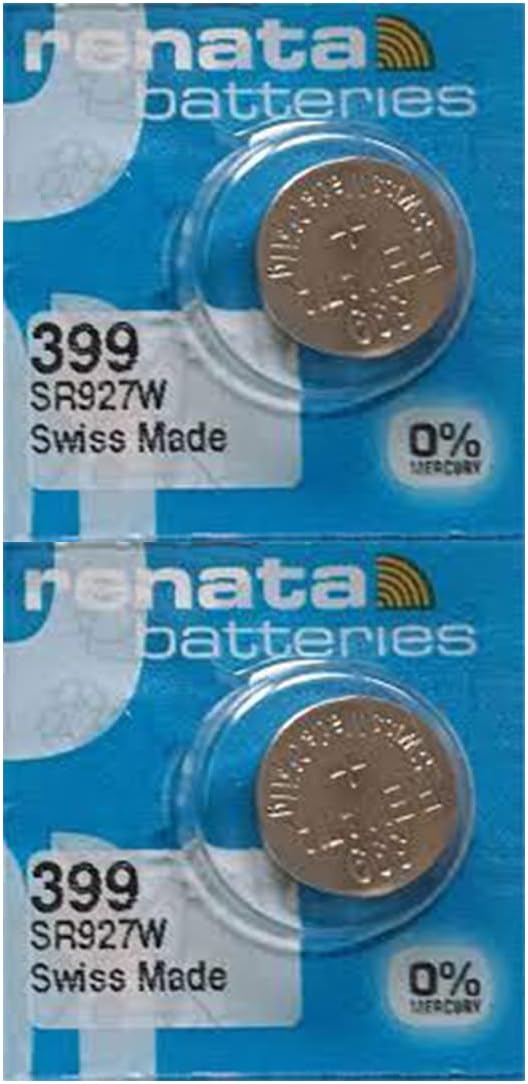
When I found the watch recently, I wanted to make it work again. I don’t wear a watch, but this felt important to me nevertheless. So I bought the batteries you see pictured at the top of this post. They worked, and I wholeheartedly recommend them.


Tamicon Tamarind Paste

Do you know about this cookbook, Heartland Masala? It’s great. I’ve been having a lot of fun going through the recipes. At the same time, I’ve been a little troubled to realize that I’m not a very good cook. When I wing it, things come out okay, but they don’t come out good.

But that’s a realization about myself, not about the book. The book has been full of wonderful little tricks and tips and encouragements for which I’m grateful. For example, I’ve been making ghee. It’s so easy! Why was I not doing this for my whole adult life?

When one of the recipes called for tamarind, I ignored the very good advice in the book, which was to just buy Tamicon Tamarind Paste. Instead, I bought this huge block of tamarind that felt like a block of concrete, and then realized I had to boil it and spend the rest of my life trying to strain the resulting goo through a mesh strainer. I spent, like, a whole afternoon working on that, and then gave up and ordered some Tamicon, and the result was a truly delicious ghugni.

There is no lesson to be learned here. Sometimes it’s a good idea to just buy the already produced thing. Sometimes it’s a good idea to do something a little more from scratch. You’ll never know, honestly. We’re just fumbling around down here. Tamicon, though, is really a good product.

Airthings Corentium Home Radon Detector

There are infinite things in life that are beyond my control. There are also infinite things, I guess, that are within my control. Anyway, control is a big deal. This summer, I’ll become a dad for the first time, and increasingly I seem to be overtaken by the urge to control something.

My partner’s parents moved into a new condo a while back, and when we stayed there recently they told us about some sort of radon mitigation that was going on in their basement. A seed was planted. Days later, when we got home, I started thinking, “What about my basement? What’s the radon situation down there?”

Actually, first I thought: “What’s radon?” I learned that it is a gas with a pretty terrifying collection of adjectives surrounding it. Colorless, odorless, radioactive, and—possibly most awful—naturally occurring. I learned that it’s pretty easy to test for, too. You put a test kit in your basement for a set amount of time, send it off to a lab, and there you have it.

I was about to buy one of these test kits when an important question popped into my mind: Do radon levels change a lot, or do they stay pretty stable? Turns out, this was a good question. Radon levels can fluctuate a lot, so there are short term tests and long term tests. Information derived from both kinds of tests can be meaningful, blah, blah, blah.

What I realized is: I’m going to want to be testing for radon a lot. In fact, if I get a high reading, I’m going to want to test again right away, and I’m not going to want to wait around for lab results. And if I end up buying a bunch of tests, I’m going to end up spending some money.

Hence, the Airthings Corentium Home, which is good for a bunch of reasons. First, it just does one thing: monitor radon levels. Second, it monitors both short term and long term levels simultaneously. Third, it is battery-operated, which is important, because these things are supposed to go, like, in the middle of your basement, away from walls and stuff.

There are cheaper radon monitors, but they either needed to be plugged in or seemed shaky where reliability and accuracy were concerned. You can also spend a lot more on an air monitor like the Airthings 2960 View Plus that monitors radon as well as stuff like CO2 and VOCs, but it occurred to me that I don’t really care that much about the CO2 reading in my basement, where I want to be checking the radon levels.

So far (it’s been about a month), the Corentium Home has been great. What I mean by that is, it’s done exactly what it was supposed to do. The long term radon level in our home so far is just above ideal, but below the level where the powers that be would be required to mitigate it in any way. Basically, it’s okay for now. And I’m glad to know that. I think.

Make Life Easy

Make Life Easy

It is cliché — which is certainly not to suggest that it isn’t true — that one element of individual greatness in team sports is the ability of one player to make their teammates better. I found myself thinking about this as I anticipated Sunday afternoon’s matchup between the Nuggets and the Jazz, two teams notable for the way they seem to orbit around their centers. I realized that I don’t know exactly what better means. 

Without question, Nikola Jokić and Rudy Gobert are tremendous basketball players. Jokić is an offensive system in and of himself; he’s a gravitational force around which bodies swirl unpredictably, and he has a space-bending ability to connect his teammates with long range laser-passes and short range dribble handoffs executed with balletic perfection. Gobert does his best work on defense; he exists as solid as a citadelle, or a kind of space station from which his teammates are able to travel as distant satellites in orbit mucking up the passing lanes of the opposition.

Playing offense with Jokić would be a blast. You’d get to try stuff out, to be creative, to stretch your limits. When you found yourself open, the ball would find you as if by magic. Playing defense with Gobert might have a similar kind of joy to it. You’d be able to take more chances, to be a little bolder. These kinds of joy have benefits beyond the immediate moments of their happening, too. When you stretch yourself, you get better at doing that. Trying things out allows you to know more about what is possible; even better, it actually expands the range of possibility. 

Of course, the problem with Jokić and Gobert is that, in spite of their greatness on one side of the ball, they are far more ordinary on the other. Jokić is able to use his great hands and tremendous feel for the game to generally be in the right place and to rack up a ton of steals for a center, but he’s a liability because of his speed. Gobert provides his team’s offense a kind of vertical space, and he’s a wonderful screener and rebounder, but given his lack of shooting touch, it’s not difficult to account for him defensively.

When we talk about making one’s teammates better, maybe what we’re talking about is a kind of ease of existence. Does the presence of the player make it possible for the players around them to be better than they would otherwise be? Does that version of better have any permanence to it? Playing with a guy like Jokić, you would think, would make you a better passer, but would you be a better passer once you moved on from him? Once you signed a new contract someplace else? 

***

As a Celtics fan, this whole way of looking at greatness has me thinking about The Jays. Jayson Tatum and Jaylen Brown look absolutely incredible this season, and their development in the context of the Celtics’ disappointing offseason has me feeling a little frustrated. It feels a little like if they just had one more good teammate, the whole thing could really start humming.

On the other hand, why is everyone struggling around them so much? They’ve each improved so much as passers and ball handlers, and they’re each so solid on defense — so locked in to the concept of what the team is doing as a unit. It isn’t enough somehow. When they played the Lakers last night, it jumped off the screen to me how easy LeBron makes things for his teammates. Sure, The Jays can get where they want to get on the floor, and they were playing with admirable ferocity and efficiency, but there seemed to be countless sequences in which one of them would create a bucket out of nothing at the end of a whole possession of difficult labor, and then the Lakers would come down and LeBron would do some subtle little thing, seemingly as simple as a wave of a wand, and suddenly one of his teammates would have the easiest look in the world. It’s a wash. In the end, the Lakers won by a point.

And that’s a kind of okay, right? The C’s lost Marcus Smart down the stretch, and Kemba Walker couldn’t throw it in the ocean, and they lost by a point to the prohibitive title favorites. Nevertheless, I found myself appreciating LeBron more than ever. His control over the game is so total at this point that it nearly vanishes. The way he creates open space for his teammates, the way he seizes certain moments on defense, the way he bails his team out of rare moments of listlessness: it’s all so lovely. Maybe greatness is a kind of disappearance or acquiescence. It’s not so much that you’re making your teammates better; it’s that you’ve hit a kind of selflessness in which you can lose yourself. We’re trying to be ourselves, and when we get there — if we get there — we find to our happy surprise that we are part of everything.

Simplify

The other day, I found myself writing, as one does, about Ersan Ilyasova. He is an elite charge-taker. What this means is that he’s elite at anticipating and positioning. He’s also probably a little quicker than someone his size has any right to be. These skills add up to make Ilyasova a really good team defender.

Recently, Zach Lowe had Zach LaVine on his podcast, and the conversation inevitably turned to defense. LaVine is a gifted athlete, but he does not (yet?) possess any of the attributes I listed above in describing Ersan Ilyasova. LaVine is actually a little less quick than you’d think he’d be, at least on the defensive end. He’s usually a step behind the action. He’s often in the wrong spot. Lowe asked LaVine if this is the kind of thing that a player can fix by just working harder, and LaVine talked about needing to trust his teammates more. The truth, I’m guessing, is that he isn’t sure.

Present day NBA basketball requires an incredible amount of strategy and communication on defense. Offenses are skilled at running their opponents through endless screens and ball-reversals, and defenders need to be able to switch assignments seamlessly while pulling one another out of bad matchups. Watch a good defense, and you’ll notice nearly constant talking and processing. Go play a pickup game sometime and you’ll immediately realize how exhausting this shit is. It wears you out.

Teams are so ready for switches and strategic ploys that they often let offenses dictate unfavorable terms. A team like the Rockets is so fundamentally ready to defend against mismatches that they often seem to invite them, baiting opposing big men into post-ups and out of more effective offensive sets. James Harden—ostensibly a guard—defends so many post-ups that he’s actually started to get more credit for his defense, even though his weaknesses on defense were the exact thing that caused the Rockets to defend the way they do.

Still, there must be a place for good, old-fashioned, on-ball defense, right? Last night, the Celtics totally flummoxed the Bucks in the 2nd half, turning a 19-point 1st half deficit into a big win. At the heart of this effort, beyond some hot shooting, was the defense of Semi Ojeleye, who over and over again simply stayed in front of Giannis Antetokounmpo. There was no real mystery to it. Just quick feet and good instincts. Semi seemed to be perfectly squared up on Giannis on every possession.

Those little moments bloomed into a big deal. Late in the game, the Bucks were frustrated. Their vaunted ball movement and their fast-paced drive-and-kick game were stuck in mud. Khris Middleton kept them in it with some incredible shot-making, but eventually that stuff ran out of steam.

How does one assess the value of a player like Semi Ojeleye, who, as Brian Scalabrine put it during the C’s telecast last night, has probably spent as much time thinking about guarding Giannis as anyone in the league (see: 2018 NBA Playoffs, Round 1)? I’m not sure, but I’m glad he’s on the team I root for. Sometimes, you just need guys who can stay in front of the great ones, because defense, finally, is just about being there a little early, profoundly in the way.

Kyrie Irving: It Begins

Paramecium multimicronucleatum, a ciliate protist.

On Sunday evening, the Nets lost 134–133 in overtime on the road in Memphis. The Memphis Grizzlies, as you might be aware, are a team full of promising young players. They aren’t good yet, so this is a tough loss for a Nets team that has designs on the playoffs. Perhaps Kyrie had some thoughts after the game! Let’s check in.

Let’s take a deeper look at a few of these quotes.

It will become more cerebral out there on the floor.

What will become “more cerebral,” exactly? I think it’s fair to assume he is saying that the Nets, over the course of the coming weeks, will transcend the newness and unfamiliarity of their roster and begin to find mutual coherence in ways that are organic and initially unpredictable.

Welcome to the big stage, you know?

The subtext here is just glorious. Why is this the big stage? What stage were they playing on before? In what possible way could a meaningless, early-season road game against the Grizzlies be “the big stage”? The answer, of course, is that Kyrie Irving (and sure, yes, Kevin Durant too) is on this team now. His teammates can’t be used to the scrutiny that comes with playing with Kyrie Irving. Kyrie though? Kyrie is used to the big stage. He knows what it is like, you see.

Guys that don’t normally make plays—they were making plays tonight.

This one is so subtle you could almost miss it. See, what he’s saying is that guys on the opposing team were playing better than they normally play. Why might that be? It’s because his Nets teammates don’t have the experience, the fight, the je ne sais quoi, to step up when it really matters. Like, for example, on the big stage. Which, you know, is an October game against what is likely to be the worst team in the Western Conference this season.

I don’t know how many games you’ve watched over your lifetime. I know you’ve watched it a long time, but when you have the physicality and you have the mind, up here, from head up, you know your spots and you can play off instincts and your teammates can trust where you’re gonna be.

Listen, I don’t know when basketball was invented. I think it was around 2.7 billion years ago, when the first eukaryotic cells evolved: cells with nuclei and organelles working, for the first time, in harmony in and of themselves, in profound and gorgeous communication. That’s when I started watching. I don’t know about you. Physicality is actually mental. And the mind is actually physical. It’s right there, from the head up. I’m not sure I can explain it to you.

I’m covering J.A. J.A.’s like, “Thank you for having my back.” Of course! I’m supposed to!

Jarrett Allen absolutely did not fucking say, “Thank you for having my back” to Kyrie Irving. Nope. Find me evidence that he said this.

Welcome to the big stage, Young Nets!

Passing Is Everything

I can’t remember where I saw this line of reasoning first, but it goes like this: the difference between being Seth Curry and being Steph Curry is all the stuff beyond shooting. In fact, while Seth has made 44.1 percent of his 3s over the course of his career, Steph is at 43.7. Meanwhile, Seth has worked his ass off to become a good rotation guy, and Steph is a legend.

The point here is that if you can’t dribble and pass well enough, it doesn’t matter how good you are at shooting the ball. This goes for all the parts of playing basketball. Teams draft hyper-athletic players—think Jerami Grant, who was a monster last night in the Nuggets’ win over the Suns—in the hopes of teaching those players the mundane stuff that will allow them to harness their athleticism. The reverse happens, too, of course—think of the Celtics’ experiments with Glen Davis and Jared Sullinger over the past decade or so.

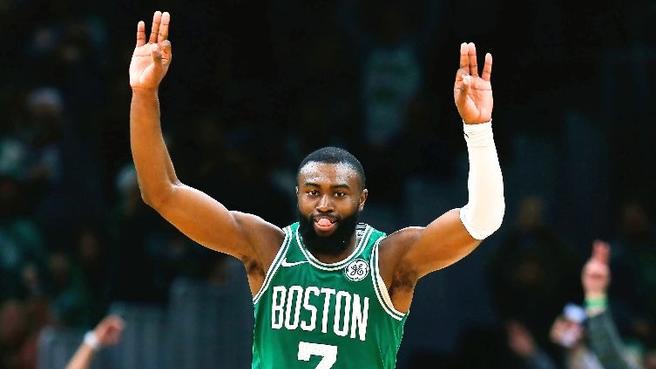
Anyway, when the Celtics drafted Jaylen Brown 3rd overall in 2016, the idea was that he was a project. An athletic wing, smart as hell, capable of learning how to be great. In various ways, he’s been both more and less than that, but through three years, while he’d had great moments and exceeded expectations here and there, his feel seemed to be lacking.

I’m being vague, because it’s hard to describe specifics. I think it comes down to passing. If you’re Jaylen Brown, and you have enough ball-handling and shooting and strength to get to your spots on the floor, the only thing left to prevent you from being great is your ability to see the floor. It tends to be the last piece to develop. Even in his destruction of the league in last season’s playoffs, it was clear there was room for Kawhi Leonard to improve his passing. This season, through two games, it feels like Kawhi is seeing it all. Everything has slowed down.

When players get great at seeing the floor and passing, they are able to exert outsized influence over the game as it is happening. Think late-career Jason Kidd, moving around the top of the key and slinging lasers all over the place. It was like he was operating the game from a distant control center. He was basically washed up as an athlete, but if you are great enough at thinking the game, and capable of leveraging your mind by moving the ball around through the pass, you can help a team win games.

Part of it is patience. You need to let the game develop. Jaylen used to go to the basket like a dart; he was a straight-line driver; he was without syncopation; there was no nuance to it. That’s one way of doing it, and if you’re lucky enough to have great teammates, you’ll usually get the ball with half a step on your defender, so your straight-line driving is an asset. To be great, you need to be able to manufacture your own leverage. Jaylen could always get to his spots, but now it seems like he’s in control when he gets there. He knows his options. Defenders are reacting to him—not vice versa.

So, yeah, part of it is patience, but part of it is vision. Passing is the great connector. Anyone who has ever learned a rudimentary press-break knows that dribbling is death. Passing is how you get to the good shit: run outs on fast breaks, wide open 3s, easy buckets. Great passing is the tactic for which there can be no accounting, because nobody can possibly move that fast. Passing takes a small advantage and explodes it into a huge one.

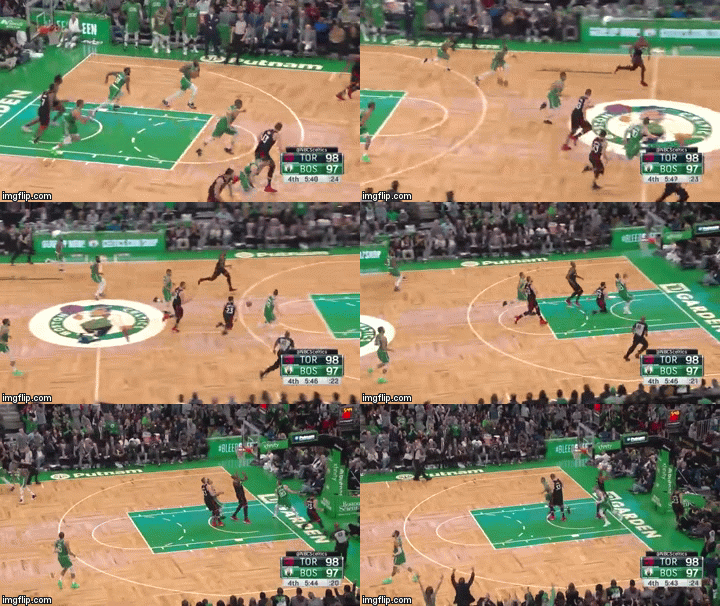
As a Celtics fan, I was optimistic heading into this season, but my biggest concern was that Jaylen (and Jayson Tatum, too) has been slow to develop as a passer. How far can you go as a team if your best players don’t see the floor better than the average replacement-level schmuck? I don’t want to overstate this; Jaylen just had four assists last night. Still, it feels like something fundamental has changed. On a fast-break in the 4th, with the C’s down one, Jaylen whipped a long bounce pass to Gordon Hayward for a lay-up that made a weird, “ohhhhh” sound come out of my mouth.

Jaylen is in control out there. He sees the game happening, and he has some control over how it happens. I’ve been a huge fan of Jaylen’s since before the Celtics drafted him, but for the first time, I think he might be truly special.

A Few Things | 10.25.19

Trae Young’s shot chart: version 1

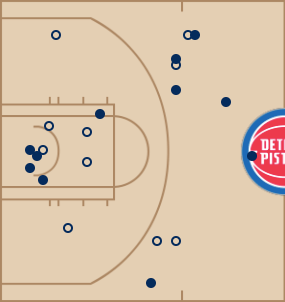
1. Trae Young made a leap this summer. Look at this goddamned shot chart:

Trae Young’s shot chart: version 2

I’d like to draw your attention to the solid dot inside the fucking center court logo. This dude is pulling up from 40+ feet and splashing 3s. Given that he’s already one of the ten or so best passers in the league (probably that’s selling him short), his ability to stretch the floor this far is deadly. It’s also encouraging that he attempted 12 free-throws. If you’re rooting for the Hawks, this was about as well as a season-opener could have gone.

2. One of the more endlessly fascinating questions in the league this season—especially in terms of possible end-game scenarios for May & June—is which players, exactly, will end up constituting Milwaukee’s best five-man unit. The only locks are Giannis and Middleton. Everyone else has concerns. The Lopez boys lack some foot-speed. Eric Bledsoe sometimes disappears from the action to a degree approaching spectrality. Wes Matthews and Kyle Korver are washed, but Pat Connaughton and Sterling Brown might not be ready. D.J. Wilson and Donte DiVincenzo loom as even less ready, but nevertheless possible, answers.

Last night, Ersan Ilyasova reminded us that he might be an answer here too. He had 13 points and 11 rebounds in 20 minutes, yes; more importantly, he is a heady, intelligent defender. In trying to stay in front of screaming comets like Russell Westbrook and James Harden, Ilyasova has a great habit of getting into position and holding his ground. He’s so ready to take a charge that it has become an innate part of his defensive behavior—not in a shitty, flopping way, but in a predictive, intuitive way. Ultimately, in most playoff matchups, Ilyasova might end up being the best answer the Bucks have at the 5.

Interestingly, last night served as an important reminder of how good Brook Lopez is, too. He’s become so adept at stretching the floor as a shooter, it’s easy to forget that he’s a skilled post-up option as well. When Giannis fouled out down the stretch, the Bucks were able to play the Rockets even over the last five minutes by going to Lopez in the post and letting the offense swirl around him.

Losing Malcolm Brogdon this summer is certainly a problem for this Bucks team, but last night’s win over the Rockets was a good reminder that this team has solutions to all kinds of problems. As far as I’m concerned, they’re still the favorites in the East.

3. Steve Kerr on the Warriors’ blowout loss to the Clippers: “This is not a one-off, this is the reality.” I have some thoughts about this:

  • The Clippers are going to send a lot of teams into existential tailspins this season. Game one isn’t the worst time to be forced to think hard about your team.
  • The Warriors put up 122 in regulation in a game where Steph Curry was 2-for-11 on 3s. This team is going to score points.
  • The Warriors’ defense was an absolute disaster. One advantage to playing a bunch of guys who aren’t ready heavy minutes early in the season: they’re going to get better sooner. There were tons of mistakes out there last night, but that means there was tons of learning. They’ve got a good coach, and they’ve got a superstar defender in Draymond Green to teach them.
  • During the brief moment in the first half in which the Warriors got cooking, you could start to see the outlines of how this might work. Steph’s gravity is as omnipresent as ever. D’Angelo Russell is a really damn good passer. This team is going to have some great moments this year.

TL;DR: I’ve still got them in the playoffs in the West.

A Few Things | 10.24.19

1. I can’t help but feel a sickening kind of glee over the fact that Kyrie Irving put up 50 points in a home loss to the Timberwolves last night. I know he’s a tremendous offensive basketball player, but would you look at this fucking picture? I mean really get a load of it.

I mean, what the fuck is this? I’m sorry, my dude, but you are not Atlas eternally hoisting the heavens. You just lost to the T-Wolves on your home floor on opening night in a game in which Andrew Wiggins played 36 minutes and was -26. On the final possession, with your team down one, you dribbled out the clock, fell over, somehow got up, and then missed a wide-open 15-footer. Congratulations on your 50 points, though.

2. Nikola Jokić is so awesome. After getting ruthlessly exposed for the first few minutes of the game by Hassan Whiteside of all people (& picking up three fouls in four minutes), Jokić sat the the rest of the first half. His teammates picked him up and staked the Nuggets to a small lead at the half, but when the going got tough down the stretch, the big guy showed up. He scored all 20 of his points in the 2nd half, including back-to-back 3s that pretty much sealed the deal. He picked the Blazers apart.

One underrated part of Jokić’s game: his relentlessness. He reminds me a little of Steve Nash in the way he probes and picks at a defense. He’s willing to shoot, but not too early in the shot clock—not when there might be something better out there. Last night, his relentlessness was on full display; he could have packed it in early after a rough start, but instead he owned the second half against a good team on the road. After struggling a ton against Whiteside early, Jokić figured him out and got him back late. Not a bad start for an MVP campaign.

Lou & Trez

There’s a whole essay to write about what is going on with the Lakers, and the profound insanity of playing LeBron and AD at the 3 and the 4 instead of the 4 and the 5. I’m interested in why the players insist on it. I’m interested in why the coaches are willing to let it happen. On its face, it makes no sense whatsoever, and it’s going to cost them games like the one it cost them last night against the Clippers. Psychologically, it’s interesting to me, but I’m not going to write about it, because I’m going to write about Lou & Trez.

The idea of the 6th Man is, at this point, a timeless basketball archetype. John Havlicek, Bobby Jones, Kevin McHale, Bill Walton, Ricky Pierce, Detlef Schrempf, Cliff Robinson, Ben Gordon, Manu Ginobili, Jamal Crawford, Lou Williams: these players constitute a lineage of singular bucket-getters and rhythm-alterers who sacrificed the dumb glory of starting for the true glory of kicking ass.

What feels unique about Lou & Trez is kinda simple: there are two of them; they are together. Also, they play, like, the whole fucking game. These dudes played 37 and 38 minutes last night—most of anyone on either team, just slightly more than LeBron and AD. Basically, once they checked in, they didn’t come out.

Lou & Trez are a rich combination of stylistic strangeness and harmony. Lou is a technician, all staccato jabs and slices. He’s a genius at taking what you give him. You drop back, he pulls up. You lurch forward, he knifes by you. He’s a master at the extra dribble; he’s a master at the wrong foot. Trez is a goddamned bulldozer, but he’s light on his feet. He’s relentless, but he’s got touch. He’s the kind of player about whom you find yourself pontificating, “Ah, yes, you see: energy is a skill.” Together, they make screens sing. To Lou Williams, a defender is just a traffic cone in a river, and he is the water itself. To Montrezl Harrell, a defender is a statue of sand in a storm.

The Clippers! What a great team! They get to be so many things. They’ve got the standard issue basketball team: Patrick Beverley, Landry Shamet or Mo Harkless depending on how you want to play, Kawhi, PG, Ivica Zubac or JaMychal Green. Patrick Patterson and Rodney McGruder filling in gaps. Mfiondu Kabengele and Jerome Robinson waiting in the wings. You can do really competent, regular basketball shit with those guys. Fuck: that team might be a title contender already. How wonderful to also have Lou & Trez, a joyous cyclone of smarts and fun, an offensive system in and of itself.

Often, when we talk about great players, we talk about how they make their teammates better. Last night, I started thinking of Lou & Trez as their own kind of great player unit. Together, they create a hub that lets everyone else just play basketball. Alongside them, Green gets open 3s, Harkless sneaks and cuts, Shamet comes off screens shooting or attacking closeouts. It just works, and in a moment in basketball in which we seem to be veering towards various forms of stylistic hegemony, it’s nice to see this kind of searing, enlightened madness rising off the bench for the Clips.