2019-20 Previews: Charlotte Hornets

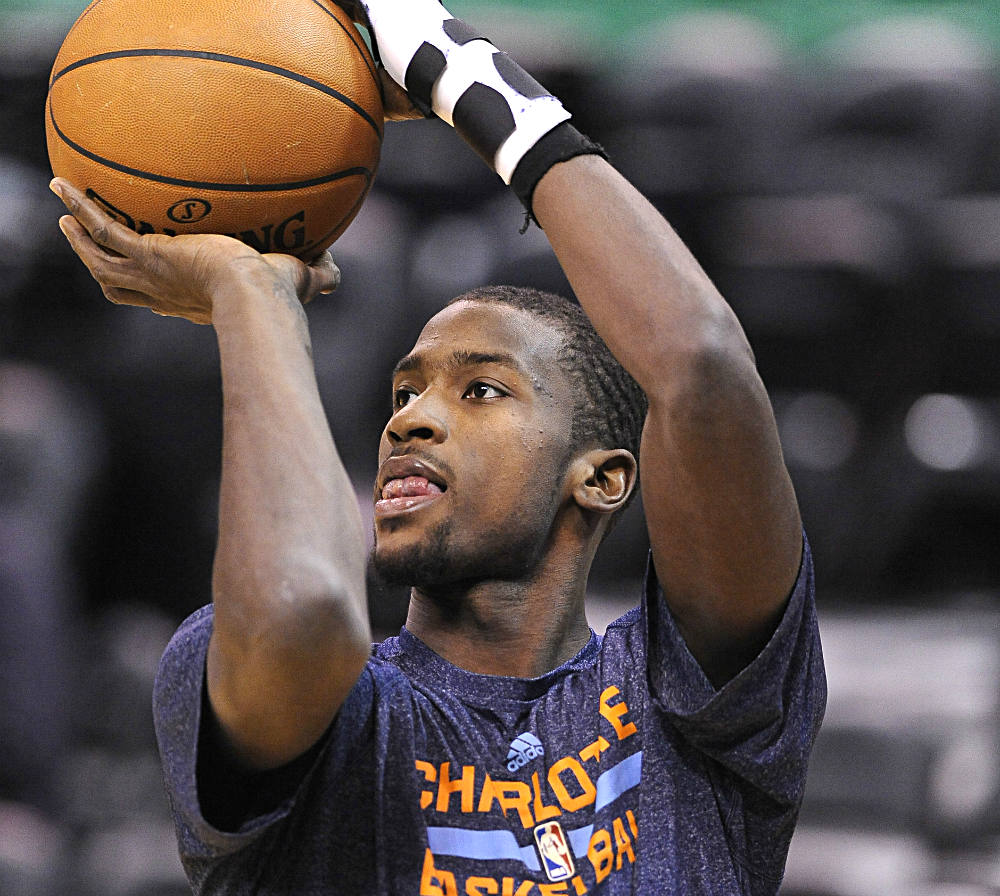
MKG doing…something. Shooting? It can’t be shooting, right?

Losses: They lost Jeremy Lamb, and Tony Parker retired, but the loss that is sending them from mediocrity into a kind of experiment in talentlessness is Kemba Walker.

Additions: They signed (really acquired in a sign-and-trade with Boston) Terry Rozier to a ludicrous 3 year/$57M contract (at least it descends each year?). They drafted PJ Washington, who is actually kinda promising. They also picked up Cody and Caleb Martin (twins!), and given the dearth of promise on this team, those guys might actually get some chances this season.

Likely Starters
Guard: Terry Rozier, Dwayne Bacon (can Malik Monk play alongside Rozier?)
Wing: Nic Batum, Marvin Williams (Miles Bridges is in the mix, too)
Big: Cody Zeller

Predicted Record: 19–63 | 30th in NBA | 15th in East
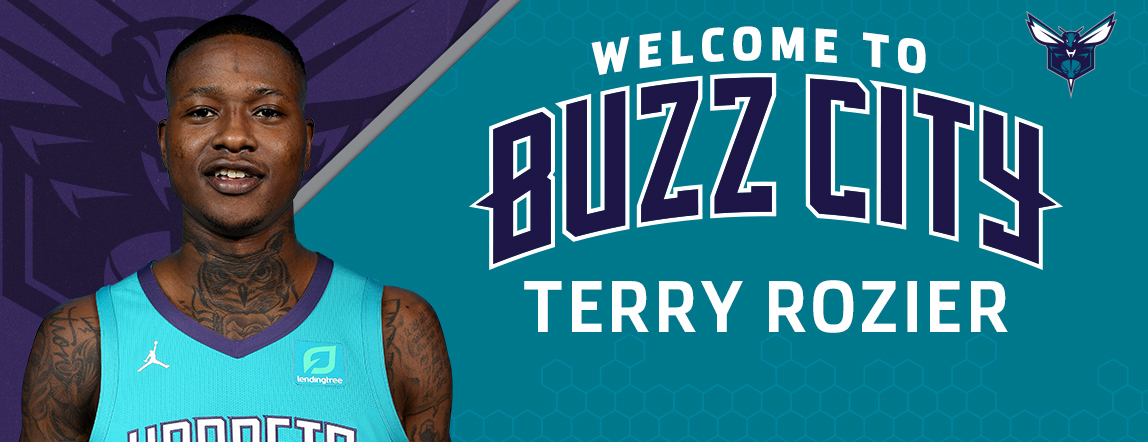
I mean, listen, he might actually be good, right?

When it comes to finding meaning in the world around us, perhaps we tend to gloss over how much of the work is done by our ability to discern general patterns. I think about this sometimes when I am following a trail in the woods. On even a pretty well-marked trail, one inevitably, at least once, finds oneself momentarily blind to the next trail marker. Generally, one knows where to go anyway, takes a few hopeful, probing steps, and then, sure enough, there it is: a blaze of yellow on a tree, a pile of stones artfully arranged on a stump, something. In moments of deeper reflection, I can’t help but think: what if there was nothing? What then?

It is alarmingly true that the world generally tells us what we’re supposed to make of it; as such, the majority of our opinions—even those that feel most personally identifiable to us—are given to us over the long course of our socialization within that world. What this means is that most of what counts as conventional wisdom ends up going entirely unchecked; our assumptions are so dearly and thoughtlessly held as to be nearly unregistered by us as assumptions.

If we were vulnerable forest creatures, one thing that would be obvious to us is that anything we’re not noticing might have the potential to kill us. Predators have to sneak up on prey, right? Why are they able to do that? You only notice what you’re capable of noticing, and the whole rest of the universe is made up of blind spots. If you think about it this way, a living thing’s ability to go on living could be said to depend on its ability to widen the scope of what it is able to perceive. Challenging assumptions isn’t just morally beneficial; it is essential to survival.

Now consider you are a fan of the Charlotte Hornets. The team you root for is at this moment almost entirely devoid of rotation-caliber NBA talent. Where would the best player on this team at the moment rank on a list of the best players in the NBA? 100th? 200th? Who even is that player? Terry Rozier? Marvin Williams? I believe this team—when it comes to winning and losing—has a chance to be one of the worst basketball teams we have ever seen, and what’s worse, there is almost nothing here to hope for. Maybe Malik Monk becomes a competent NBA scorer? Maybe Miles Bridges is good?

And yet, because we know that our very survival depends on our ability to try to broaden our perspective, it is incumbent upon us to try thinking about this in a different way. In Moby Dick, Herman Melville wrote:

Is it not curious, that so vast a being as the whale should see the world through so small an eye, and hear the thunder through an ear which is smaller than a hare’s? But if his eyes were broad as the lens of Herschel’s great telescope; and his ears capacious as the porches of cathedrals; would that make him any longer of sight, or sharper of hearing? Not at all.—Why then do you try to “enlarge” your mind? Subtilize it.

Here we are reminded that broadening our perspective is about subtlety. As a Hornets fan, you must subtilize your fandom. Could there be something to find joy in beyond winning? Something beyond, even, the hope of future winning? What might we be missing in all of this?

Whale with the bemused expression of a 2019-20 Hornets fan no longer under the tyrannical spell of caring about winning.

The answer, I think, is simply the sport itself. At the bottom of everything, beneath all the schemes and sets and salary cap sheets, there is basketball. There is simply the fact that there is a game to watch, and players playing in it. It might be the case that all of our attention to what we conceive of as success is distracting us from what might be an even greater joy. I’m sure I’m not alone in noticing that at times this summer it has felt like the conversation around basketball has moved further and further away from the game itself. In Charlotte this season, this absolutely garbage roster will serve as a kind of experiment in what basketball is when there is no meaning in it whatsoever beyond the fact that it is happening. I, for one, am looking forward to seeing whether I can enjoy it.
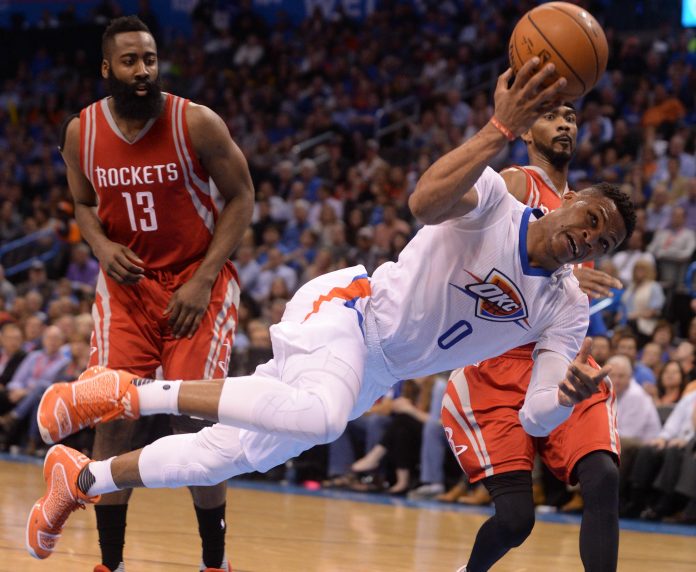

Alone Out There: On Russ & Harden

A few years ago, I wrote roughly 1500 words about a regular season game between the Thunder and the Pacers from late in the 2014-15 season. In that game, Russell Westbrook scored 54 points on 43 shots and the Thunder lost by 12. As a result, they ended up just missing the playoffs. That season, Durant had been injured and only played 27 games. For the rest of the season, Russ went nuts. The game swirled around him like a cyclone. Or maybe it was a black hole. Watching him was exhilarating but also alarming. After the late-season loss to the Pacers, I wrote of Russ, “It felt like he was all alone out there. It felt like the other people on the court were ghosts. Russ seemed to be part of a drama no one else could see. The basketball game started to disappear.”

Watching the Rockets this year, at times, felt like a version of the same thing. It is not hard to argue that, over the long history of the NBA, the recent iterations of Russell Westbrook and James Harden have carried a bigger offensive load than any other players ever have. It is fair to wonder whether it is possible for these two particular players to coexist on a basketball team. Certainly, each has picked up some bad habits over the years since they last played together: resting up on the defensive end, failing to engage off the ball, making questionable decisions in key moments, etc. It is fair to think this experiment is destined for failure.

One of the many paradoxes of basketball is that of all the team sports, basketball is the one in which individual players have the most influence over winning, and yet, at the same time, the fluid nature of the game means that combinations of players succeed or fail in often surprising ways. Talent tends to win out, but only if that talent is able to cohere beneficially. Russell Westbrook is not traditionally an easy fit. Russell Westbrook is a meteorite screaming through the sky, and you don’t generally ask a meteorite to adjust to what the rest of the heavenly spheres are up to. A meteorite just keeps screaming. The sky is almost irrelevant.

And yet, in the face of all logic, having sat with the news of Russ-to-the-Rockets for a little while now, I’m feeling strangely optimistic. As I often do in times of profound confusion, I looked up some stats. Back in 2011-12, Russ & Harden played 1231 regular season minutes together over 62 games, and the Thunder had a net rating (point differential per 100 possessions) of 11.3. In the playoffs, they shared the court for 458 minutes over 20 games and the net rating went up to 14.7. 11.3 is elite; 14.7 is scorched earth. In both cases Russ + Harden was OKC’s best 2-man combo on the offensive end. 

Obviously, I am aware that these statistics are basically ancient runes at this point. Those were different players, and that was a different league. Harden made 113 of 292 3s that season, and 86% of those were assisted. This past season, Harden made 378 (!) of 1028 (!!) 3s, and just 16% of those were assisted (!!!!!!!!!!). Meanwhile, Russ made us think about triple-doubles so much over the past few seasons that he drained the concept of mystique entirely. The point is, we’ve all been through a lot since the 2012 Finals. We’re irrevocably changed. 

Basically, what we’ve got is a bunch of statistical evidence that Russ and Harden might be the two least malleable players in the NBA, so singularly who they are that it feels impossible to imagine them otherwise. They may be past their primes. They likely are. And yet, many years ago, together, they were more together than their individual selves. The thing about basketball—the thing for which there is just no accounting—is that in basketball, context is everything. It’s why individual players are so important. A great player can make other players greater. Russ and Harden have spent years crafting games somewhat antithetical to this idea, but now they are together again. What will that look like? What will it mean?

Around 335 million years ago, the tectonic churning under the massive plates of the Earth’s crust formed of the continents a supercontinent. Around 175 million years ago, those plates drifted apart. Evidence suggests that the forming and breaking apart of supercontinents has been cyclical throughout the geological history of Earth. One might think of time itself as a this sort of endless drift, great forces coming together and breaking apart, a kind of planetary breathing. 

Two great forces of basketball have collided now in Houston, and years from now, our ancestors will read the fossilized evidence of what that was like. They will wonder if we saw it coming, but if they look at their own lives, they’ll know we had no idea.